Japanese Sake Culture 201
Beer is for the initial toast, but sake is for the rest of the night. It shifts the pace from the office to the izakaya. As you share a tokkuri, the professional distance drops and the conversation becomes more casual.
Sake 201: The Flavor Compass
Once you know the regions, start identifying which of these three major “styles” makes your taste buds wake up.
Namazake (The Fresh & Raw): Nama means “unpasteurized.” This sake is bottled straight from the press. It is vibrant, slightly fizzy, and tastes like “living” sake. It is seasonal, so grab it whenever you see it on a menu.
Ginjo/Daiginjo (The Fruit & Floral): These are highly polished sakes. They taste like biting into a crisp Fuji apple or a ripe melon. Because they are delicate, they are best served chilled and enjoyed without heavy, greasy food.
Junmai (The Umami Powerhouse): This is for the rice purist. It is full-bodied, slightly acidic, and has a deep, savory umami kick. This is your best friend when eating rich, salty izakaya plates like grilled mackerel or soy-marinated dishes.
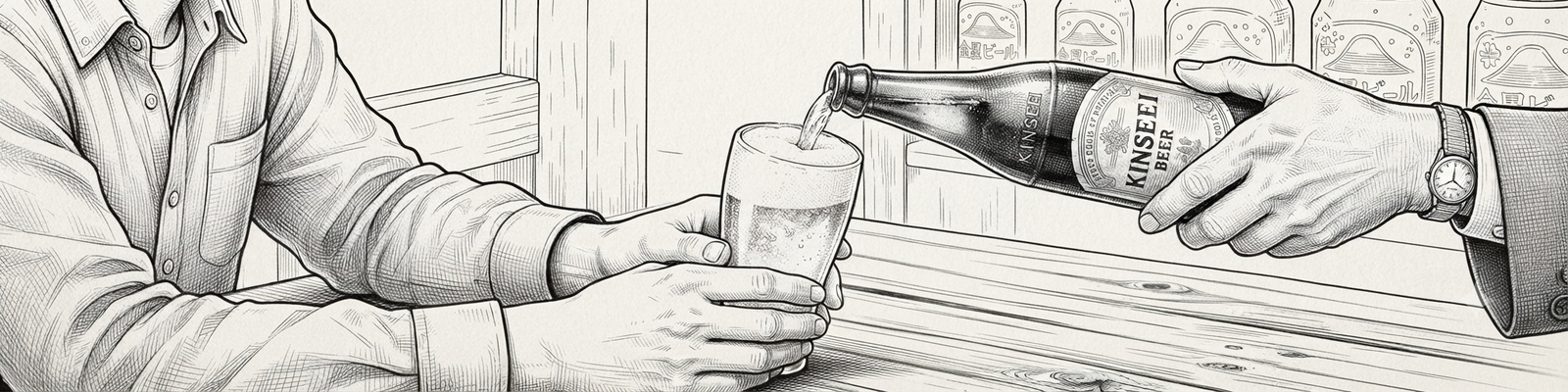
Never Pour Sake for Yourself: If your cup is empty, hold it out and let someone else fill it. When you notice someone else’s cup is low, pick up the flask (tokkuri) with both hands and refill theirs. It is a reciprocal cycle of service.
Know your Role: It is standard practice to pour drinks for others rather than yourself, starting with your superiors. When clinking glasses, it is polite for a junior to keep their glass slightly lower than a senior’s to show respect.
The Toast is Shared: While “Kanpai!” is the standard toast for any drink, sake is rarely downed in one go. Sip it slowly. If you are drinking with a superior or a client, keep your glass slightly lower than theirs when clinking cups as a sign of respect.
The Round System: In a nomikai, you typically don’t pay for your own glass. Usually, the host or the most senior person at the table covers the entire bill. If you are among peers, it is standard to split the total cost evenly, regardless of who drank more or ordered the premium bottle.
The Modern Shift in Japanese Sake and Drinking Culture
The rigid “salaryman” drinking model is undergoing a significant transformation:
- Work-Life Balance: Government-led Work Style Reform initiatives and a shift in generational priorities have reduced the pressure to stay out late. Participation in workplace nomikai has declined, with many workers now viewing them as “unnecessary” or a form of unpaid overtime.
- Legal Protections: Since 2022, Japan’s power-harassment laws have made it risky for managers to coerce subordinates into drinking. The term aru-hara (alcohol harassment) is now widely used to describe coercive drinking behavior.
- Changing Demographics: Younger employees and working parents are increasingly prioritizing personal time, leading to a decline in the frequency of year-end and project-wrap parties compared to the 2010s.
Read the Room, Girlfriend.
Here´s the correct order to start the night, drinks-wise.
The “Kanpai” Hierarchy
While teishaku (pouring for others) is the primary etiquette, the group kanpai (cheers) usually happens once everyone has a drink. The youngest or lowest-ranking person should wait to take their first sip until superiors have initiated the toast.
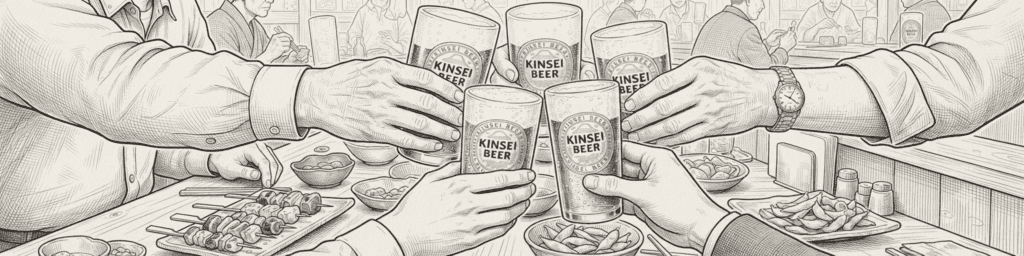
The “One-Beer” Rule (Starter)
IIn many izakaya, it is customary to start with a large beer for the table (“toriaezu biiru”—”beer for now”). It is an efficient, culturally standardized way to synchronize the start of the meal.
Step 1. Where Are You? The Venue Determines the Tone…
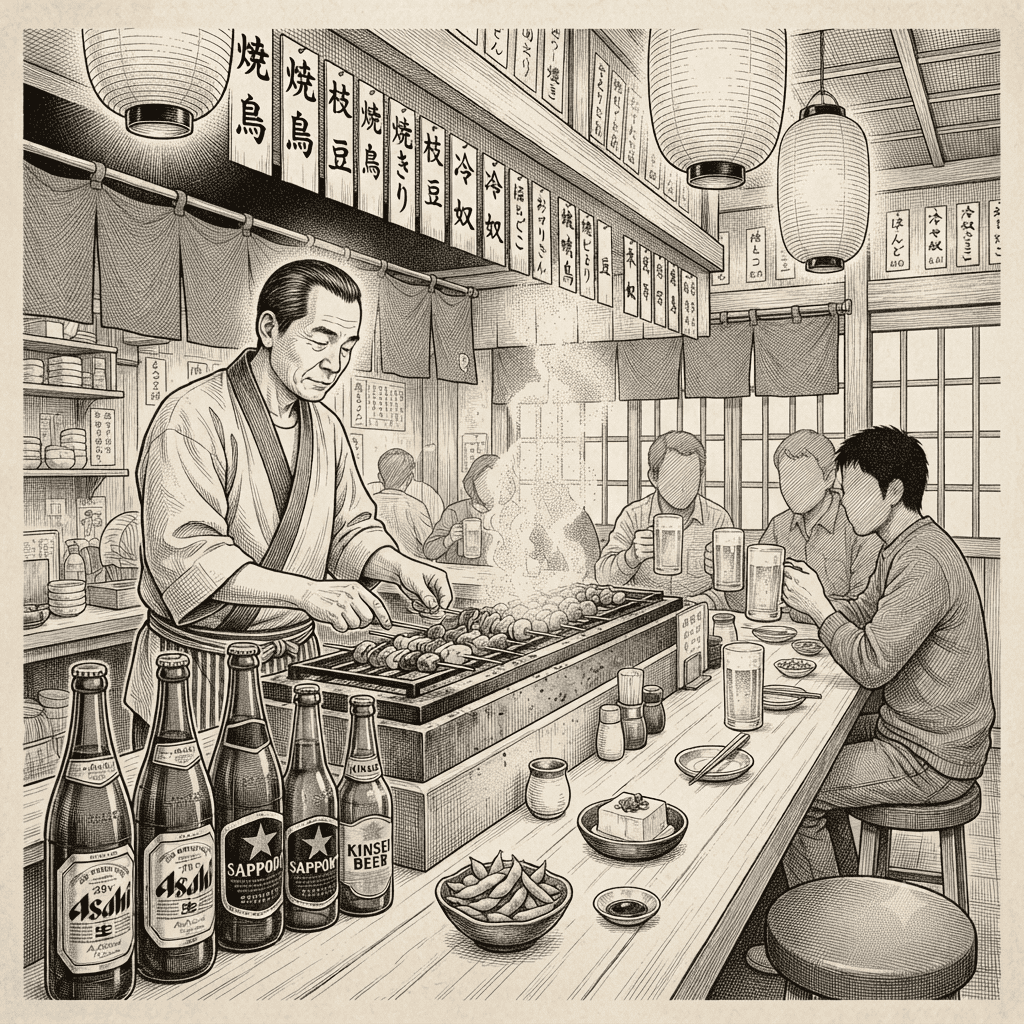
Izakayas / Pubs
These remain the primary venue for beer. The environment is loud and communal, designed for sharing large dishes, which naturally encourages the consumption of pitchers or multiple rounds of beer.
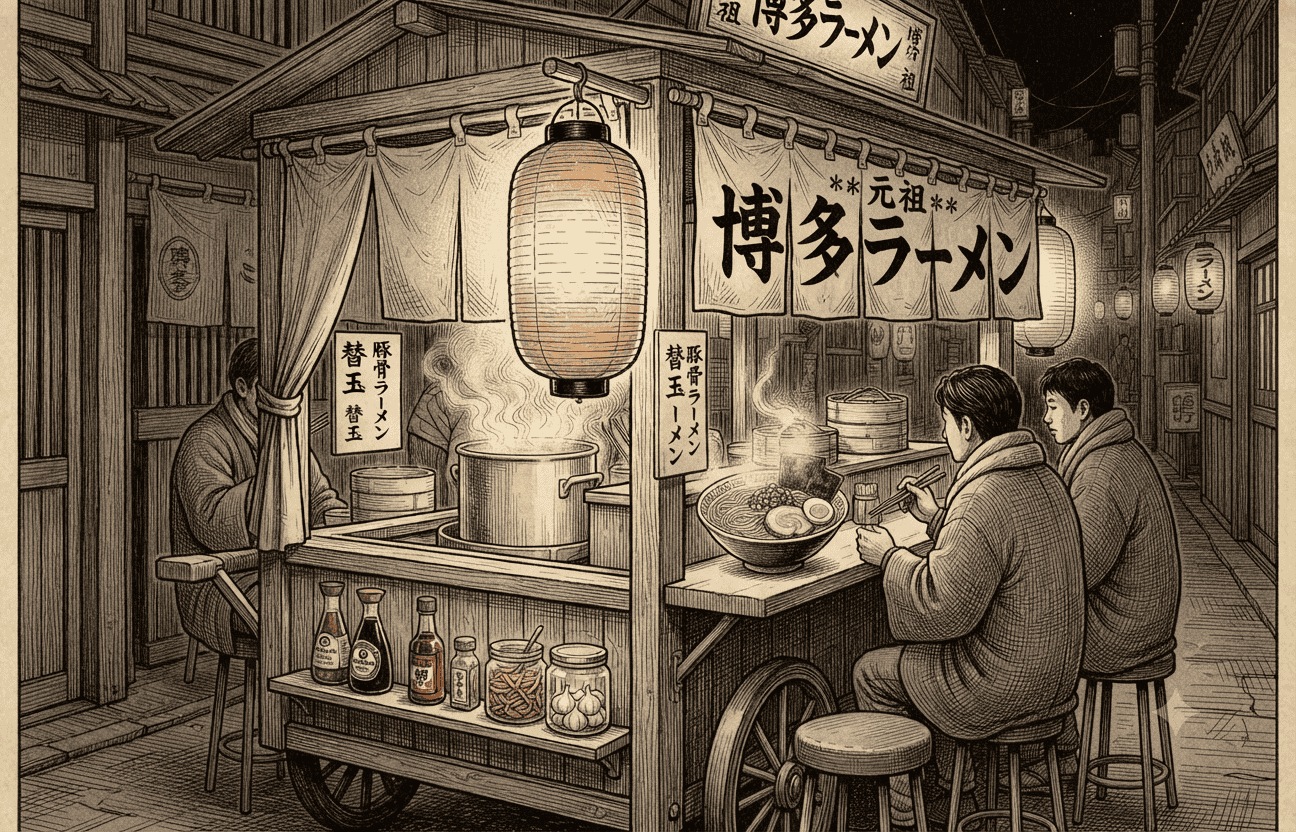
Tachinomi / Standing Bars
A popular choice for a quick drink after work or before catching a train. These venues emphasize brevity and mobility, where beer is often consumed standing, removing the formal etiquette associated with seated dining.
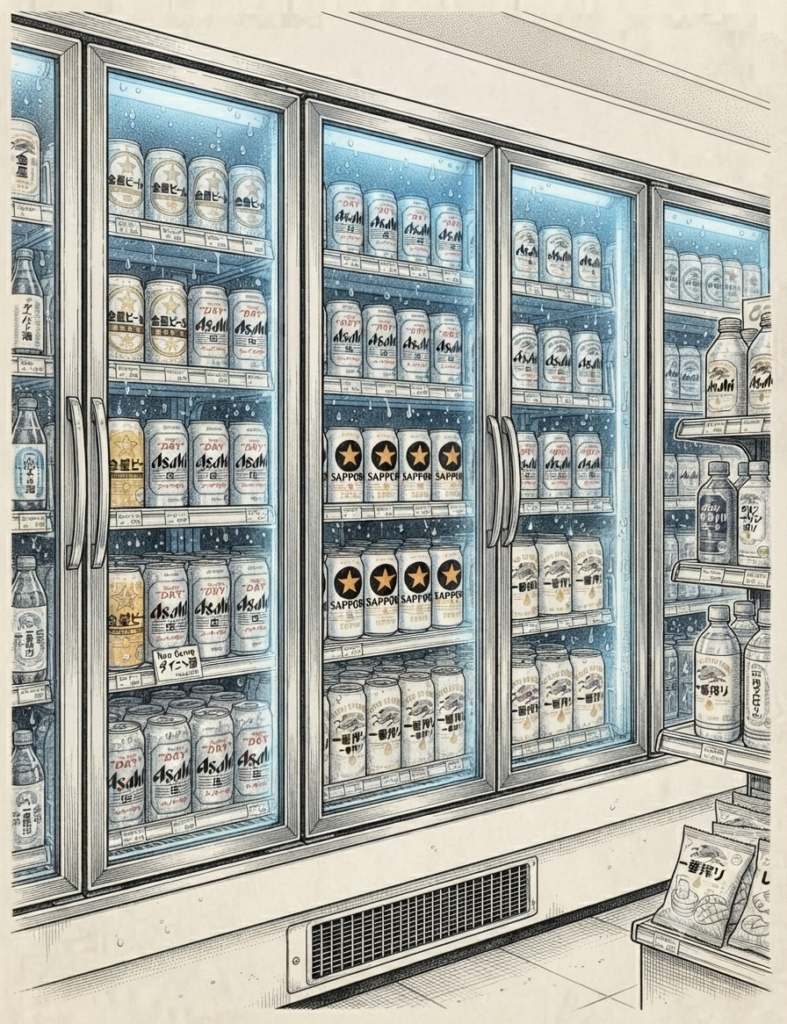
Konbini / Convenience Stores
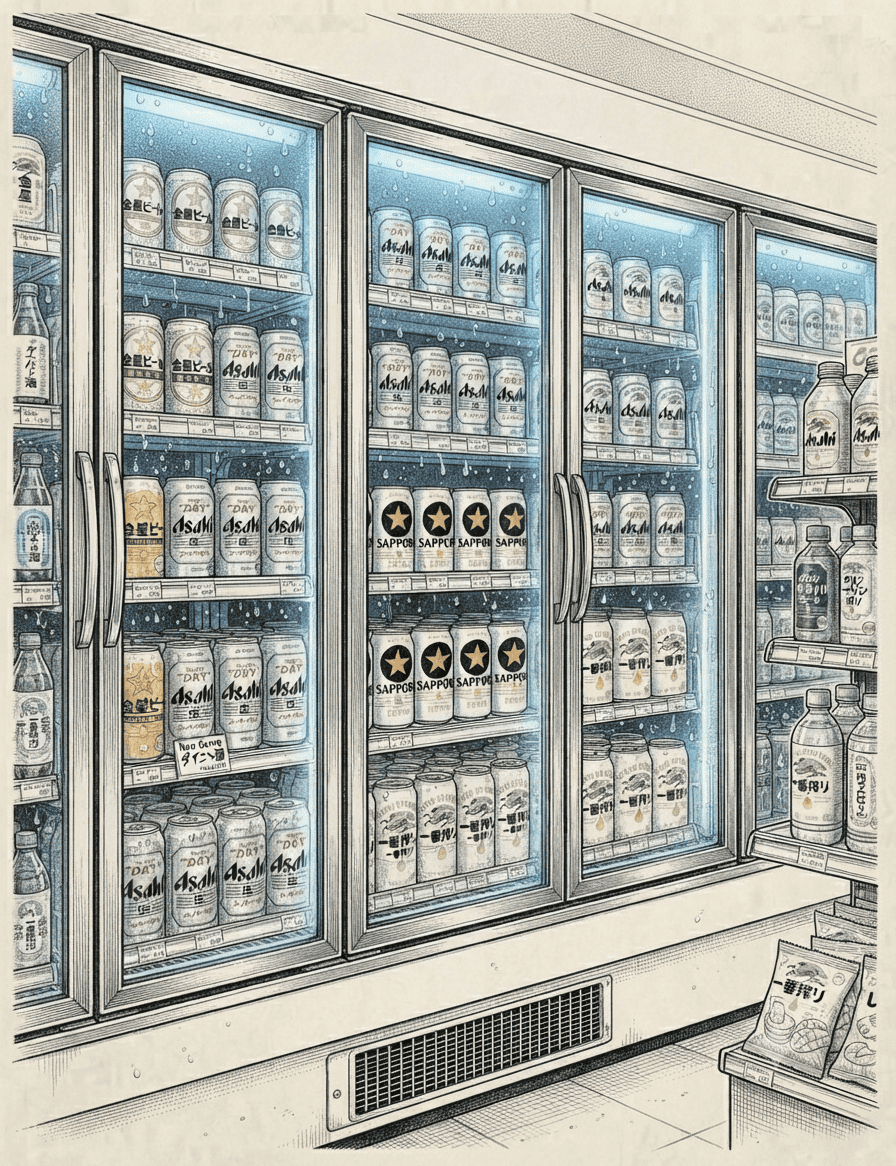
IWith Japan’s relatively relaxed open-container laws in certain public areas, buying a “tall boy” at a convenience store to enjoy at a park, riverbank, or even while walking is a socially accepted way to decompress.
Step 2. Always Check the “Flavor” of the Hangout
Gauge whether the gathering is a formal office nomikai that demands traditional etiquette, or a relaxed tachinomi where you can simply focus on enjoying your drink.
The Evolution of Social Sake Etiquette
- Individualism: Younger generations are increasingly breaking away from the “group-first” mentality. Solo drinking, whether at a high-end craft beer bar or a quiet neighborhood spot, is no longer stigmatized.
- Aru-hara (Alcohol Harassment): The cultural landscape has shifted sharply against peer-pressured drinking. It is now common for hosts at social gatherings to offer non-alcoholic beer options explicitly, ensuring those who choose not to drink are fully included without social friction.
- The “Slow” Drink: There is a growing trend of “quality over quantity.” Rather than the historical goal of getting intoxicated to bond, many modern Japanese drinkers prefer visiting specialized craft breweries to analyze flavor profiles, treating beer and sake with the same reverence as wine or cocktails.
Japan Sake Den Mini-Directory
Three recomms per city; have at it:
| City | Sake Bar/Den | Specialization |
| Tokyo | Ginza Kimijimaya | Historic shop-bar hybrid with 10+ rotating sakes. |
| Virtu | Opulent setting featuring signature sake-based cocktails. | |
| Sake Bar 42 | Curated selection of premium, small-batch bottles. | |
| Kyoto | Asano Nihonshu | Standing bar with 150+ varieties and expert pairings. |
| Masuya Saketen | Trendy spot offering high-quality sake with tapas-style dishes. | |
| Sakehall Masuya | Housed in a renovated townhouse with garden views. | |
| Osaka | Sake Republic | Enthusiast-focused space with curated flights. |
| Nihonshu Bar ○△□ | Standing-style bar with a rotating seasonal selection. | |
| Tachinomi (Uranamba) | Hidden local gems found within the vibrant Uranamba district. | |
| Sapporo | Bar Kamata | Specialist den with over 180 Hokkaido-produced labels. |
| Sake Bar Hibiki | Focuses on seasonal namazake (unpasteurized sake). | |
| Sapporo Sake Village | Cooperative tasting space for Hokkaido regional breweries. | |
| Nara | Nara Izumi Yusai | Offers 120+ brands from 28 local Nara breweries. |
| Yagi-Shuzou | Traditional storehouse featuring local brewing history. | |
| Kuramoto Shuzo | Scenic brewery setting in the Tsuge mountains. |
Tired of Sake?: Essential Beer Kanji
アルコール分
Arukooru-bun: Indicates the Alcohol by Volume (ABV). As noted above, most standard Japanese lagers hover around 5%, but many are creeping into the sixes, so do your reading.
糖質ゼロ
Toushitsu Zero: “Zero sugar” or “zero carbohydrates.” This is very common in the happoshu and new genre categories, catering to health-conscious consumers.
原材料
Genryou: The ingredients list. Look for 麦芽 (Bakuga)—this is “malt.” If it is listed early in the ingredients, it is a true beer. If you see 大豆 (Daizu) (soy) or えんどう豆 (Endoumame) (peas), you are looking at a new genre product.
ビール
Biiru: Pasteurized! A more stable, traditional beer. May have a slightly richer, less “spritzy” character than its Nama counterpart.
瓶 / 大瓶
Large Bottle: Look for this on menus. It´ll be the traditional O-Bin (large bottle, usually ~633ml) staple size you´ll order to share in an izakaya.
ノンアルコール
Non-alcoholic: In Japan, products labeled as “non-alcoholic” typically contain less than 1.0% alcohol by volume, and the vast majority of mainstream brands are engineered to contain 0.00% alcohol.