Konbini Lyfe
The viral explosion of konbini tourism on TikTok is driven by a fundamental contrast between the low-cost, convenient setting and the surprisingly gourmet quality of the products. And the super cheap egg sandwiches.
+
Because stores are on nearly every corner, chains cannot compete on convenience alone. They are forced into “fierce culinary competition,” resulting in constant product innovation, such as FamilyMart’s viral Famichiki and Lawson’s Karaage-kun nuggets.
Kind of like IKEA, items are designed with precision, such as the pull-tab packaging for onigiri that keeps seaweed crisp by separating it from the rice until the moment of consumption. And even that goes viral.
The trend has moved beyond just eating items off the shelves; people are creating viral hacks, like customizing cup noodles with extra ingredients or using Famichiki to build DIY sandwiches. Cool. Good.
Do You Even Know How To Kombini?
Convenience stores in Japan are not a monolith. They are distinct ecosystems, each with a specific “hero” category that savvy locals prioritize. Master the hierarchy to optimize your daily hauls.
FamilyMart: The Hot Counter King
The Move: Treat the hot food counter as a primary meal source, not a snack. The fried chicken is the gold standard for juiciness and flavor consistency.
The Hack: Order your chicken to-go, then head to the bakery aisle to grab a plain shokupan (milk bread) slice or a slider bun to create an instant DIY sandwich.

7-Eleven: The Fancy Choice (Yes.)
The Move: Focus on the 7-Premium Gold line. These items (often labeled with gold packaging) feature ingredient sourcing that rivals supermarket-grade goods.
The Hack: Skip the generic sandwiches and prioritize the onigiri selection here. The seaweed-to-rice moisture ratio is engineered to stay crispy longer than the competition.
Lawson: The Dessert & Bakery Leader
The Move: Go straight for the refrigerated dessert cases. Their Uchi Café series produces bakery-level quality, specifically their signature mochi rolls and cream puffs.
The Hack: If you are hunting for a specific regional collaboration or a high-aesthetic seasonal pastry, start at Lawson. They frequently launch limited-run items that rotate every two to four weeks.
Now What You´re Gonna Wanna Do Is…
- Use real actual money: Use these stores as your primary hub for international-friendly ATMs, especially when navigating smaller, cash-only neighborhoods.
- Learn to accept an offer to heat your food: If you buy items from the hot counter or bento sections, always confirm if you want them heated (atatamemasu ka?).
- Go immediately to the indoor or outdoor standing counter eating area: Pay at the register, then immediately move to the designated “stand-aside” area to reorganize your coins or items. Blocking the flow during a rush is the quickest way to out yourself as a tourist.
Here She Is / Isn´t She Lovely
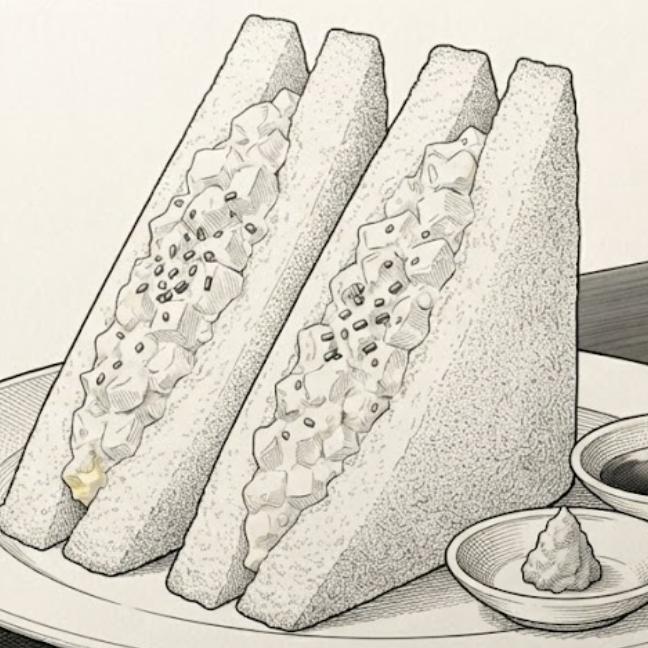
The konbini egg sandwich, particularly the version synonymous with Lawson, is the princess of Japanese convenience store food. Its viral fame rests on a simple, engineered perfection: ultra-soft, crustless milk bread (shokupan) paired with a rich, creamy egg salad.
The secret isn’t high-end ingredients, but rather the extreme attention to texture and freshness. Because these sandwiches are restocked multiple times daily, they maintain a consistent, pillow-like quality that feels indulgent rather than industrial.
You can typically find these egg sandwiches priced between ¥200 and ¥300 (roughly $1.30–$2.00 USD).