
The Teishoku Set Meal: Why Japan’s Traditional Combo Meal is the Only Lunch You Need
Teishoku (定食) . The Japanese traditional set meal; you have to know it.
A Teishoku set meal is a traditional Japanese “set “combo meal” built on the principle of a main dish, rice, miso soup, and one or two sides. Served on a single tray, it is the ultimate Japanese comfort food designed for balance and harmony, featuring pickled vegetables and small rotating sides like tofu or seaweed.
If you spend any time in a Japanese business district at 12:15 PM, you notice a distinct rhythm. The streets are flooded with people on the move, but they aren’t drifting aimlessly looking for an “experience.” They are heading toward the Shokudo (casual canteen) or a reliable neighborhood spot. They aren’t looking for a show; they are looking for a Teishoku.
For those of us living here, the Teishoku, the standard set meal, is not just an option; it is the structural backbone of the workday. It is the culinary equivalent of the “everyday Alentejo red” in Portugal: reliable, high-value, and unpretentious. If you want to understand how the Japanese working population stays fueled without breaking the bank or falling into a post-lunch slump, you start here.
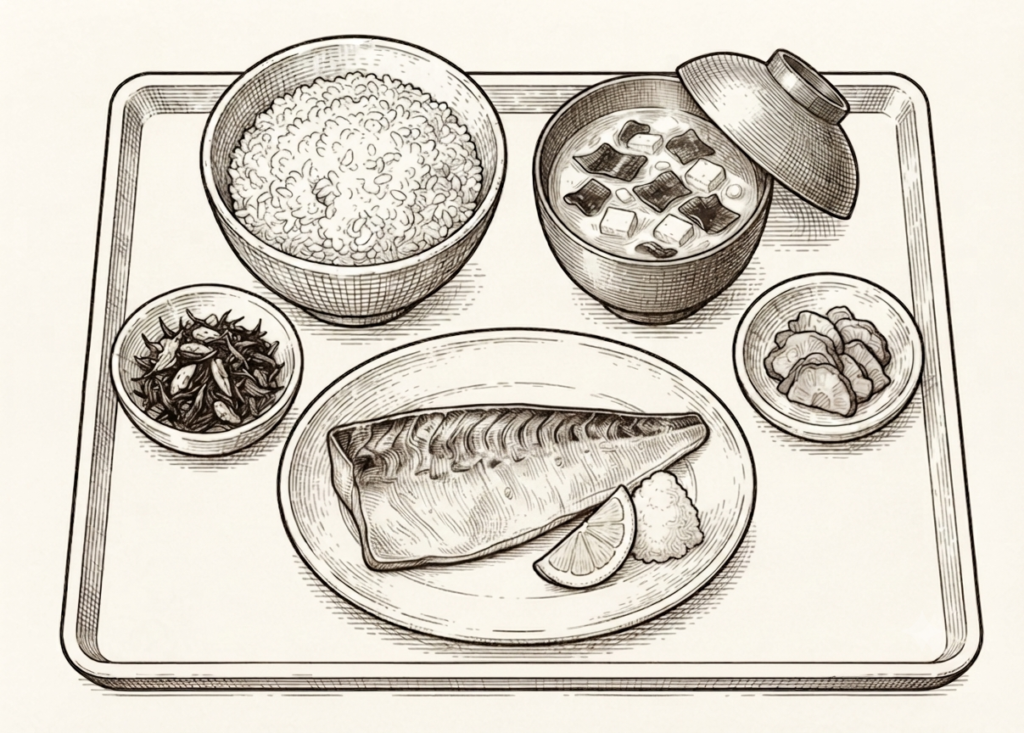
The Anatomy of Teishoku
A Teishoku is a lesson in balance. It removes decision fatigue. You don’t agonize over a 20-page menu; you choose your main, and the rest of the puzzle is solved for you. Every set follows a proven architecture:
The Main (Shusai): The protein is the anchor, whether it’s salted mackerel, ginger-fried pork (shogayaki), or breaded pork cutlet (tonkatsu).
The Rice (Gohan): This is the foundation. It is always steamed, high-quality Japanese short-grain, served in a bowl that sits to the left of the tray.
Miso Soup (Shiru): More than just a starter, the soup provides essential electrolytes and warmth, served to the right of the tray.
Pickles (Tsukemono): The vital component for texture and acidity. They cut through the richness of the protein and cleanse the palate between bites of rice.
The Sides (Kobachi): Usually small portions of seasoned vegetables, tofu, or seaweed that ensure you are getting a variety of nutrients rather than just a heavy plate of starch and meat. This isn’t about dieting; it’s about nutritional math. The combination provides sustained energy, preventing the sharp blood sugar spikes common with “fast food” lunches.
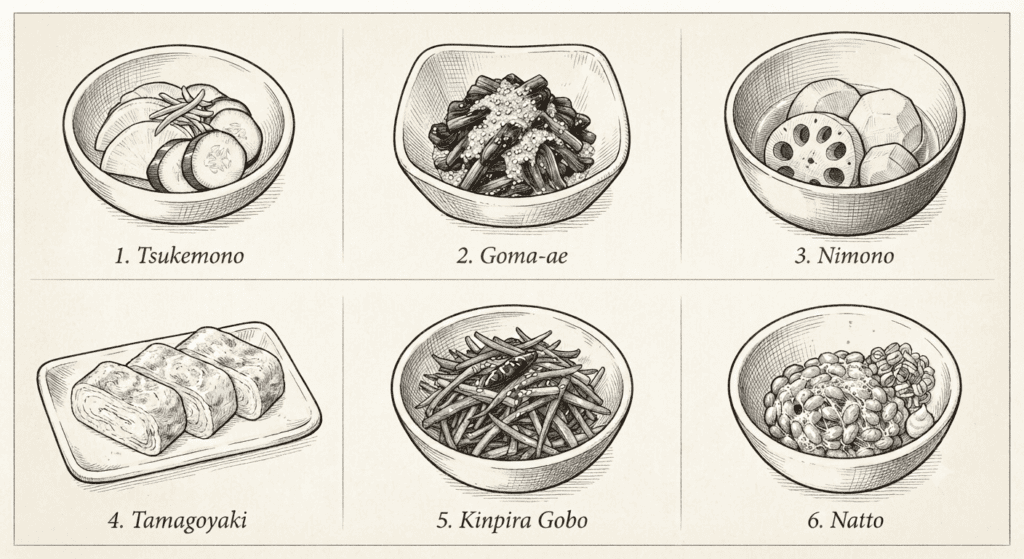
1. Tsukemono: A mix of pickled takuan (yellow daikon) and kyuri (green cucumber).
2. Goma-ae: Blanched spinach coated in a rich, textured sesame dressing.
3. Nimono: Simmered root vegetables, including lotus root, carrot, and taro.
4. Tamagoyaki: Slices of slightly sweet, layered rolled omelet.
5. Kinpira Gobo: A savory-sweet sauté of shredded burdock root and carrot.
6. Natto: Fermented soybeans, shown with their characteristic sticky strings and topped with green onions.
Finding the Value
In Japan, the highest quality food is often found in the places that make the least noise.
The Shokudo (Canteen)
These are the soul of the neighborhood. Often marked by a weathered noren (curtain) and a plastic-food display case that looks like it hasn’t changed since the Showa era, these spots are where you find the best value. You’ll typically order via a ticket machine at the entrance, hand your slip to the staff, and sit at a worn wooden counter. It is fast, efficient, and deeply rooted in the community.
The Chain Standard
Don’t turn your nose up at places like Ootoya or Yayoiken. These are the reliable workhorses of the Japanese dining scene. They aren’t “fast food” in the Western sense; they are fast-prepared but high-quality. They maintain a consistent standard that you can depend on, whether you are in a quiet coastal town or the middle of Tokyo.
The Resident’s Etiquette
To eat like a resident, you must respect the environment. This isn’t about being formal; it’s about being efficient and aware.
The Ritual: When your tray arrives, take a moment. Itadakimasu isn’t just a polite gesture; it’s a standard acknowledgment of the chef’s work and the ingredients.
The Workflow: Keep your tray organized. In these high-turnover spots, the staff works with precision. When you finish, move your dishes back to the tray, push it to the edge of the counter, and say Gochisousama deshita (thank you for the feast). It shows you aren’t a tourist taking up space, but a patron who understands the flow of the room.
Seasonality: The Changing Pace
One of the most important markers of a “local” spot is how the menu shifts with the seasons (shun). A true Teishoku spot isn’t static. In winter, you’ll see an increase in root vegetables and heartier, warmer dishes. In spring, you’ll find lighter, bitter greens that signify the start of the year.
By paying attention to these shifts, you aren’t just eating—you are participating in the region’s rhythm. You begin to understand what ingredients are actually at their peak rather than what is being mass-produced year-round.
A Habit, Not a Choice
Ultimately, the Teishoku is about reclaiming your lunch hour. It’s about walking into a place where the quality is guaranteed, the price is fair, and the meal serves a purpose.
When you make the Teishoku your default, you stop chasing the “next big thing” and start appreciating the consistency of the “good thing.” It is the most effective way to eat well, stay within a budget, and feel like you actually live here. Next time you’re out, skip the trendy cafe and look for the steamed rice, the miso, and the modest main dish waiting for you at the local Shokudo.
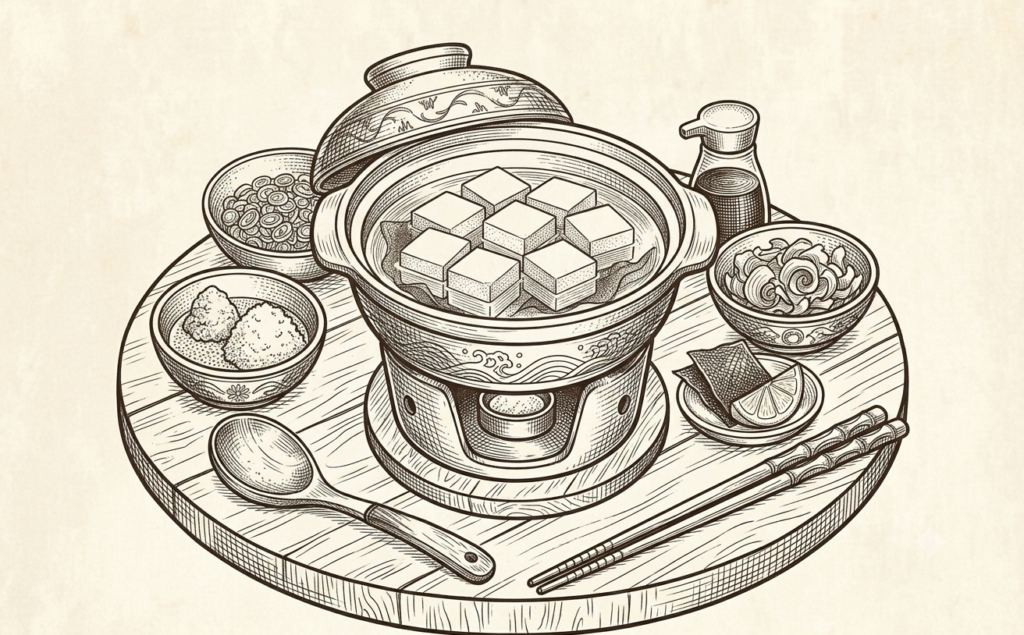
Kuidaore (食い倒れ) — “eat until you go broke.”
Osaka wins the food war. There.
It literally means “to eat oneself into ruin” (kui = eating, taore = collapse/fall down), capturing the idea that a person might spend all their money pursuing great food. It is not about gluttony so much as Osaka’s deep cultural pride in eating well, where enjoying delicious food is considered one of life’s greatest pleasures.

Japan: Different and Better
In many countries, “cheap food” implies compromise. In Japan, it usually doesn’t.
The philosophy isn’t “finding bargains.” It’s discovering where ordinary people actually eat every day.
Tiny ramen shops.
Family-run udon shops.
Gyudon chains.
Curry houses.
Yakitori counters.
Tempura specialists.
Our target across these meals will be:
¥600–1,200 ($4–8)
The quality is often astonishing.
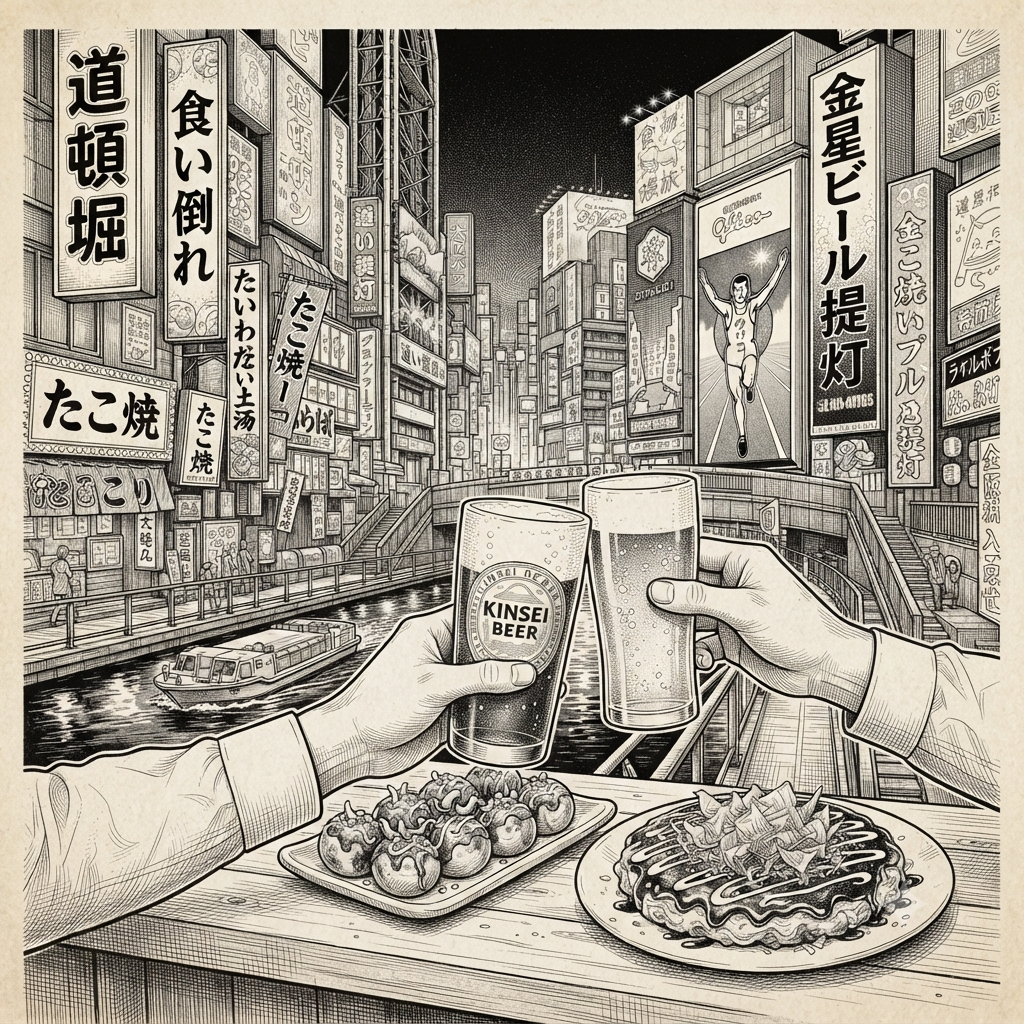
Each of the top labels has a distinct identity and flagship product.
Japan’s beer culture is dominated by four major brands, often referred to as the “Big Four.”
Asahi
The market leader at nearly 40% of all beer sales.
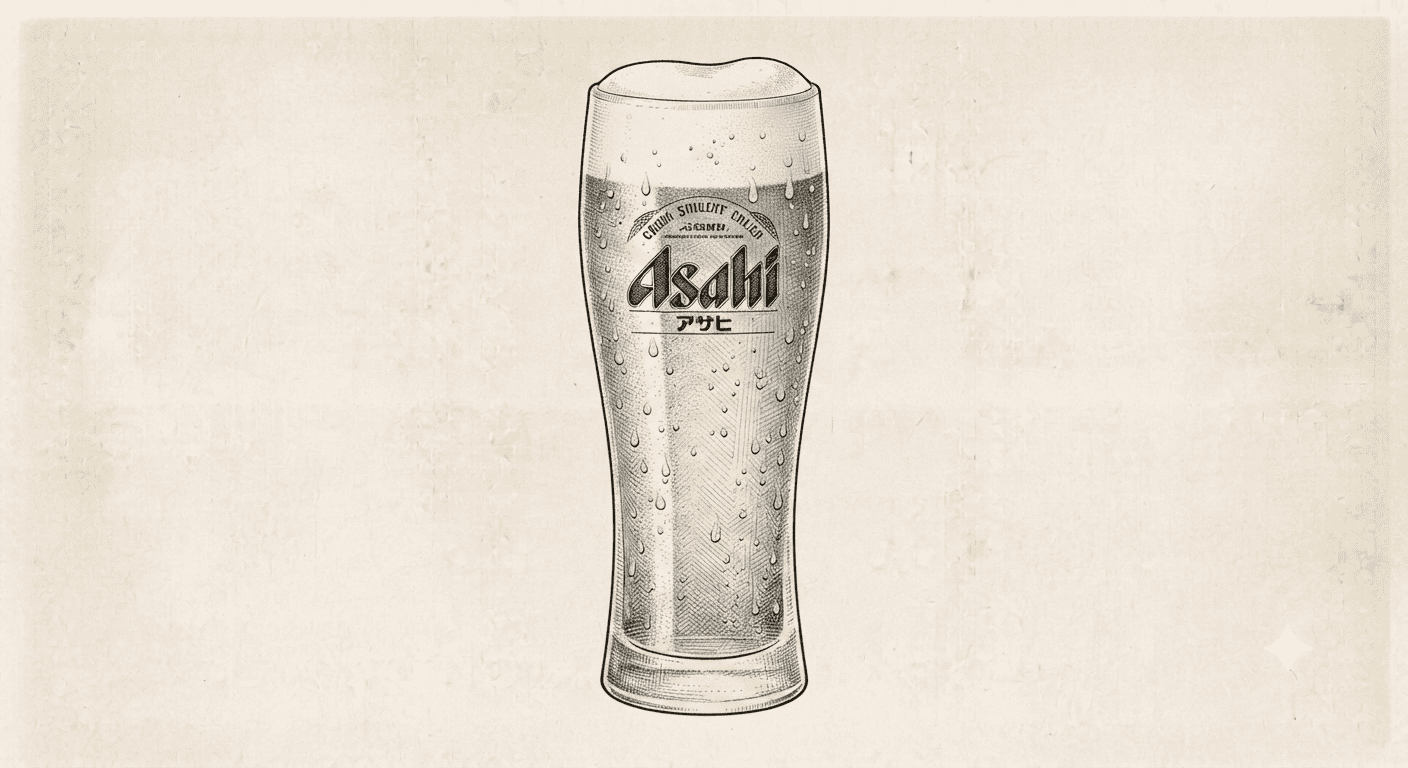
Asahi is most famous for Asahi Super Dry, a crisp, light, and “dry” lager known for its clean finish.
Kirin

A heritage brand with a focus on traditional, rich, malt-forward brews.
Its flagship, Kirin Ichiban Shibori (“First Press”), is renowned for its smooth, velvety texture.
Suntory
Known for premium, high-quality pilsners.

The Premium Malts is its standout, featuring a refined foam and aromatic profile.
Sapporo
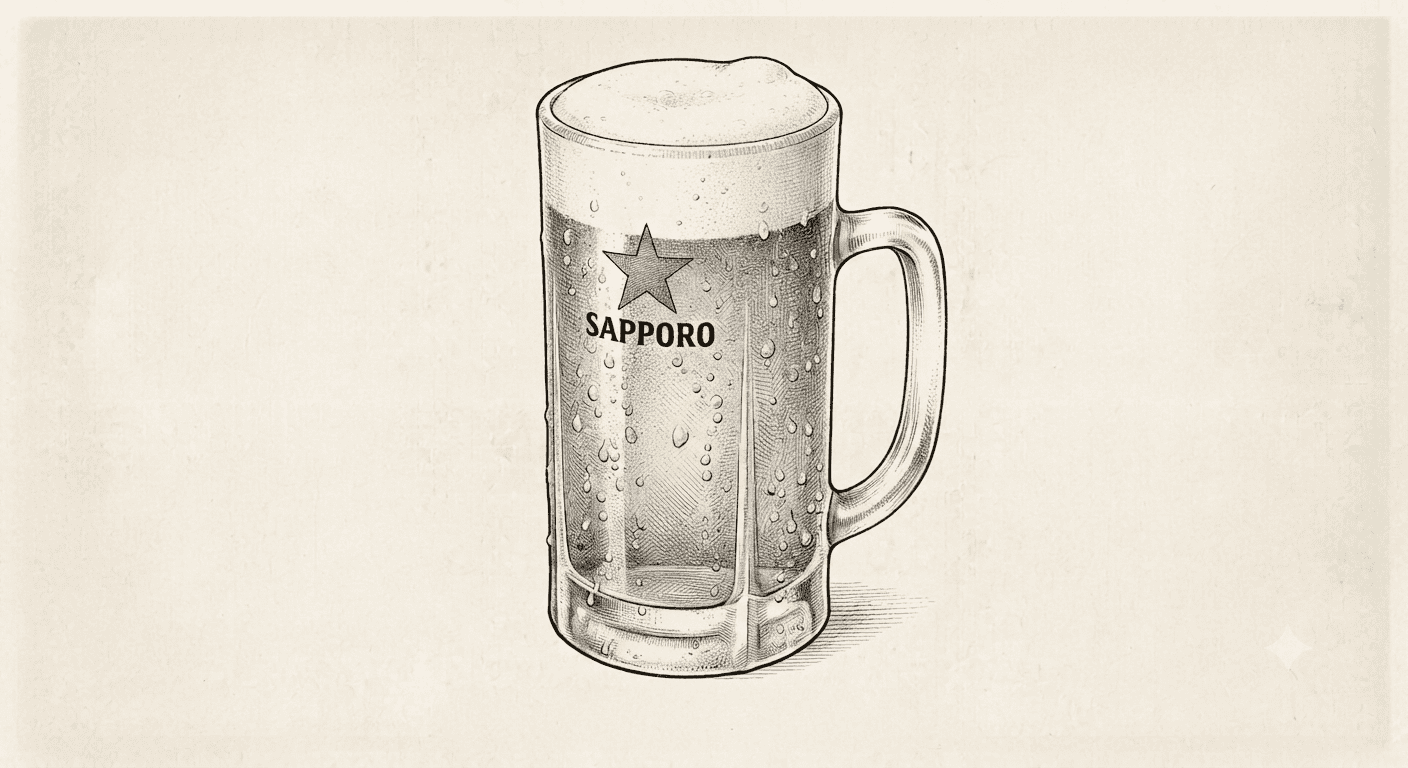
Japan’s oldest and most iconic (granted, subjective) beer brand.
Its core domestic product is Sapporo Black Label, a balanced and refreshing lager.
But you should get to know Yebisu, too, its premium line, brewed according to strict purity standards.
About Us
Who is CheapGood and Why Are You Doing This?
First, why not? The middle and lower classes are being squeezed right now. Our parents traveled; our bosses travel. We are not quite as flush. CheapGood is about finding ways to enjoy the best food and drink without breaking the budget and feeling guilty the next day. We´re a small group of Japanese natives and expats with an interest in good food and drink, sharing what we find here, with no expectation that anyone will read it. That is all. Let´s see if it helps small business owners and small business visitors.
Want to receive a launch email?
CheapGood is about finding the meals locals eat every day that deliver exceptional quality for less money than you´d expect to pay. We´re currently verifying our lists and curating our notes… leave your email and receive a notification when we launch.