The Insider’s Guide to Tabélog: How to Eat Like a Tokyo (and Everywhere) Local
If you’ve ever relied on Google Maps in Japan, you’ve likely encountered the “tourist trap” phenomenon: restaurants with 4.7-star ratings that turn out to be mediocre, overpriced, or designed specifically for foreign visitors.
In Tokyo, the secret to finding the best food isn’t found on Western review sites—it’s found on Tabelog. As Japan’s leading restaurant search and review platform, it is the tool that locals actually trust.
Why Tabelog is Different
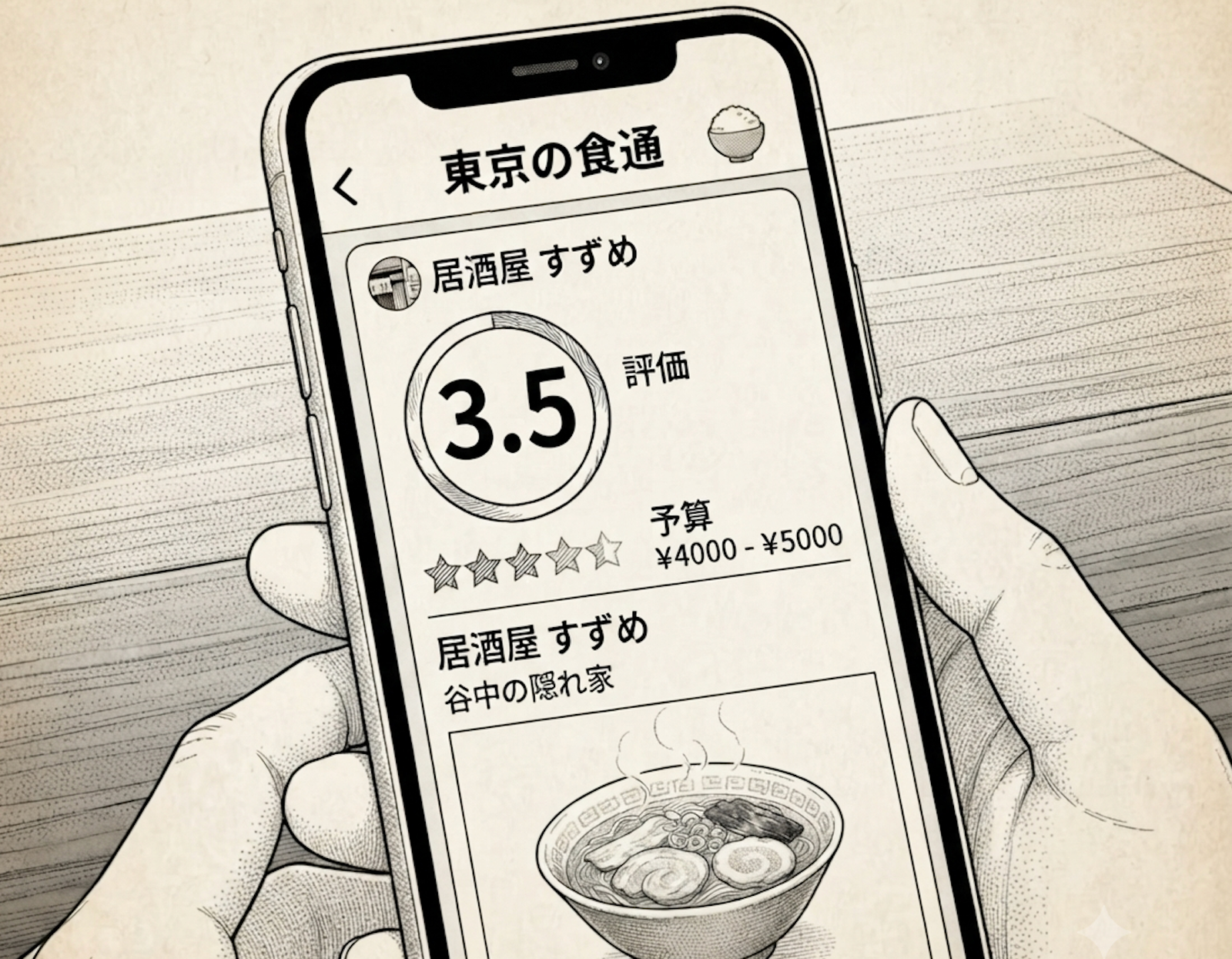
The fundamental difference lies in the psychology of the review. In North America, users often start at 5 stars and deduct points for minor inconveniences. In Japan, the baseline is 3.0—a score that indicates a restaurant perfectly met expectations and provided the service they were paid for.
Because of this conservative grading, Tabelog scores are much harder to earn, making the platform an incredibly accurate barometer for quality.
Decoding the “3.5 Rule”
To navigate Tabelog like a pro, you must abandon the idea that anything below a 4.0 is “average.” Here is the standard curve used by Tokyo residents:
- 3.0 – 3.1: A solid choice; reliable and standard.
- 3.2 – 3.4: Very good; consistently high quality.
- 3.5+: Top-tier. These spots are exceptional and often require reservations.
- 4.0+: Rare and prestigious; these represent less than 0.1% of all restaurants on the platform.
Tip: If you are in a rush and want a “banger” of a meal, prioritize anything with a 3.5 rating or higher. Just keep in mind that high scores can sometimes be influenced by “cost performance”—a restaurant might be rated highly because it offers an incredible lunch value, rather than just purely based on ingredient quality.
How to Use It Effectively
- Search Strategy: The English version of the site is great for browsing, but it lacks a direct search bar for specific restaurant names. If you’re looking for a specific spot, Google the restaurant name followed by “Tabelog,” and click the direct link.
- Use the Filters: You can narrow your results by payment method (cash, card, IC), non-smoking status, or even private rooms.
- Check for Awards: Look for the Hyakumeiten (100 Famous Restaurants) badge. These are curated lists of top-rated spots by category, handpicked by the platform.
- Reservations: Many restaurants accept online bookings directly through Tabelog. If you don’t speak Japanese, this is a massive advantage as it eliminates the language barrier entirely.
By switching your reliance from Google Maps to Tabelog, you’ll stop seeing the city through a tourist lens and start dining alongside the people who know Tokyo’s culinary landscape best.
This is a good video primer, if you´re ready for more (in English).
No Time for Tabelog? You can find one of these cheap eats options are almost on every-other street in Tokyo.
Reliable Cheap Local Chains:
Tokyo’s local chains are revered by residents for their absolute consistency and value. Spots like Matsuya (English menu link), Yoshinoya (English link), and Sukiya (also English) specialize in gyudon (tender beef over rice), often costing less than 600 yen. For noodles, Marugame Seimen serves piping hot, freshly made udon where you can customize your bowl with various tempura sides for a very modest price. Each of these chains offer multilingual touchscreens and remain open 24 hours a day, making them an stress-free, reliable choice.
The “Konbini” Gourmet:
Convenience stores like 7-Eleven, FamilyMart, and Lawson are legendary in Tokyo and are not just for snacks; they are a gateway to high-quality, affordable meals. You can pick up a bento box or a warm onigiri for a quick lunch in a local park. For an even savvier hack, visit the basement “depachika” food halls of major department stores or local supermarkets after 7:00 PM, when freshly prepared meals and sushi packs are often discounted by 20% to 50%.
BUT… Quick note on the above:
- Sukiya, Yoshinoya, and Matsuya: These are the primary chains where you will find the highest concentration of 24-hour locations. While most branches in busy areas or near train stations operate 24/7, some locations—particularly those in quieter residential zones or inside certain office buildings/shopping centers—may have set closing times.
- Marugame Seimen: Unlike the beef bowl chains, Marugame Seimen generally does not operate on a 24-hour basis. They are typically standard restaurant locations with specific opening and closing hours, usually focused on lunch and dinner service.
- Late-Night Surcharges: Even at the locations that do stay open 24/7, be aware that some chains have introduced a “late-night charge” for meals served between 10:00 p.m. and 5:00 a.m. to account for higher labor and utility costs. For instance, Sukiya may apply a surcharge of around 7%, while Matsuya’s prices can increase by approximately 10% during those hours.