
Japanese Sake Culture 101
If you´ve mastered the basics of Japanese beer, you have only scratched the surface. Just as you wouldn’t visit Japan without understanding its ramen culture, you cannot claim to understand the local palate without learning the basics of sake.
Sake is not just “rice wine”. It´s the heart of the izakaya experience, the traditional companion to the country’s finest cuisine, and a category that rewards the curious. We have (maybe?) demystified the beer wall; now, we talk sake. Whether you´re standing in a convenience store aisle or staring at a sprawling menu in a Tokyo side street, this guide provides the tools you need to choose, order, and drink sake with confidence.
Japanese Sake 101: The Social FAQ
- When to drink it: Sake is incredibly versatile, but it shines most when paired with food. You order it when you want to elevate a meal, particularly Japanese cuisine like sushi, sashimi, or hot pot.
- Beer vs. Sake: Think of beer as the “starter” and sake as the “main event”. It is standard practice in Japan to start a meal with a beer to quench your thirst, then transition to sake once the appetizers arrive.
- Ordering etiquette: You can absolutely go to an “izakaya” specifically for sake, as many specialize in extensive lists. If you are at a standard restaurant, you generally order sake by the go (a traditional measure, about 180ml) or by the bottle.
- How much to drink: Sake generally has a higher alcohol content than beer (usually 15–20% vs. 5%). Pace yourself by drinking it alongside a glass of water (yawaragimizu), which is common practice even among locals to keep the experience enjoyable.
Japanese Sake 101: The Convenience Store Survival Guide
Standing in front of a wall of sake at a Japanese convenience store can be overwhelming. Ignore the flashy labels and focus on the information that actually matters.
The “One-Look” Filter: The Polishing Ratio
Before you grab a bottle, turn it around. Look for the Seimai-buai (精米歩合), or polishing ratio. This number represents how much of the rice grain remains after polishing; the lower the number, the more of the outer grain has been removed, typically resulting in a more refined flavor.
- 70% or higher: Often robust and rice-forward.
- 60% or lower: Usually cleaner, with more floral or fruity aromatics.
The Price-to-Flavor Matrix
Convenience store sake is high-quality, but price is the best indicator of what you are getting.
The Temperature Cheat Sheet
The beauty of sake is its versatility. Use this guide to decide how to serve your bottle.
- Junmai: Excellent warmed (about 40–45°C) or at room temperature. Warming brings out deep, savory umami notes.
- Ginjo / Daiginjo: Always drink these chilled. Warming these grades will often destroy their delicate, fruity aromas.
- Honjozo: Versatile; enjoyable both chilled and warmed depending on your preference.
Japan Sake Economics 101
Everyman´s japan
How Much is Too Much for Sake?
| Price | Expect | For | |
| Under ¥1,000 | Simple, but still drinkable. Often has a slightly sharper alcohol kick. | Daily meals, izakaya snacks | |
| ¥1,000– ¥2,000 | Smoother, cleaner, and more aromatic. This is where you find the best value. | A pleasant evening drink. | |
| ¥2,000+ | Premium grades (Ginjo/Daiginjo). | Special occasions, gifting. |
Pro Tip for the Budget Shopper
If you are strictly looking for the best bang-for-your-buck, always scan the 1,000–2,000 yen range first. This tier often contains smaller, 300ml–500ml bottles of high-grade Junmai Ginjo that would cost double or triple in a restaurant. It’s the “insider’s secret” to drinking premium sake on a convenience store budget.
Regional Quick-Start
You don’t need a map of all 47 prefectures to navigate a menu. You just need to know these three major “flavor profiles.”
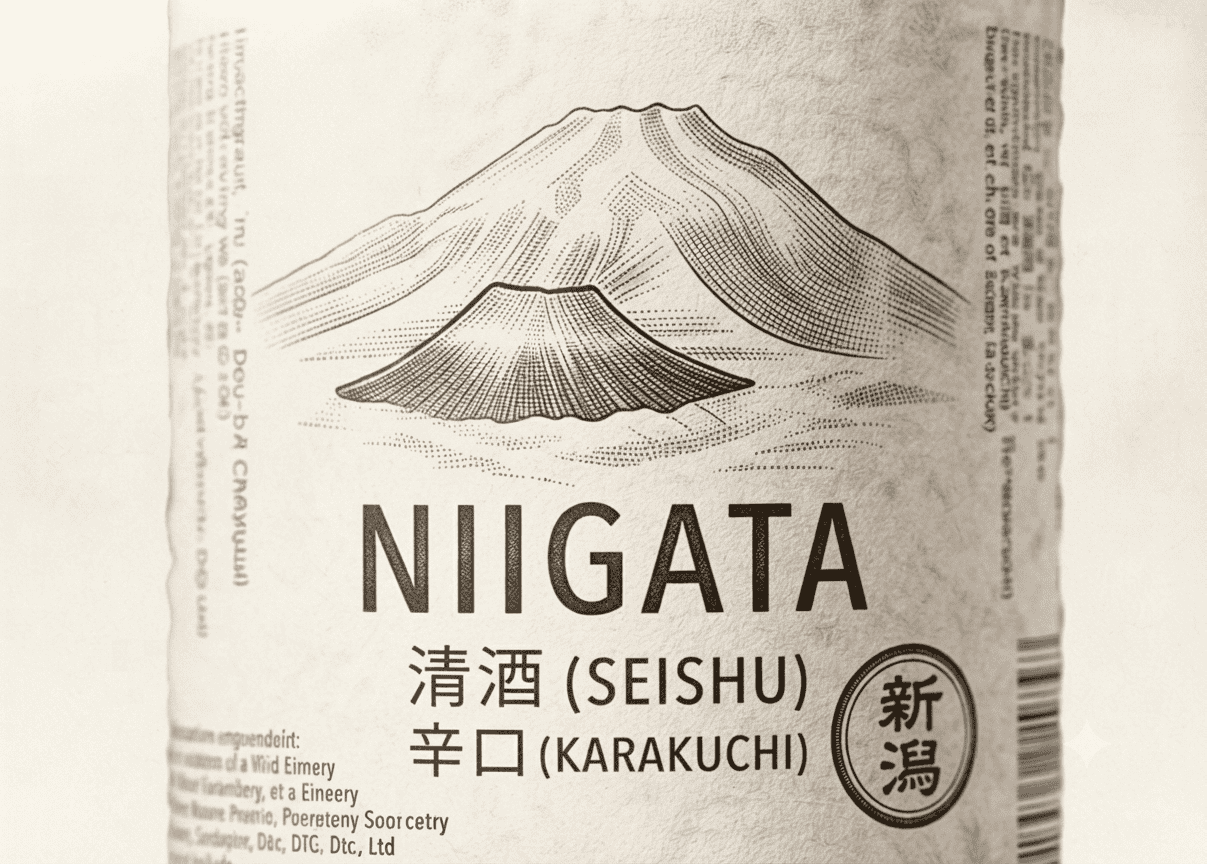
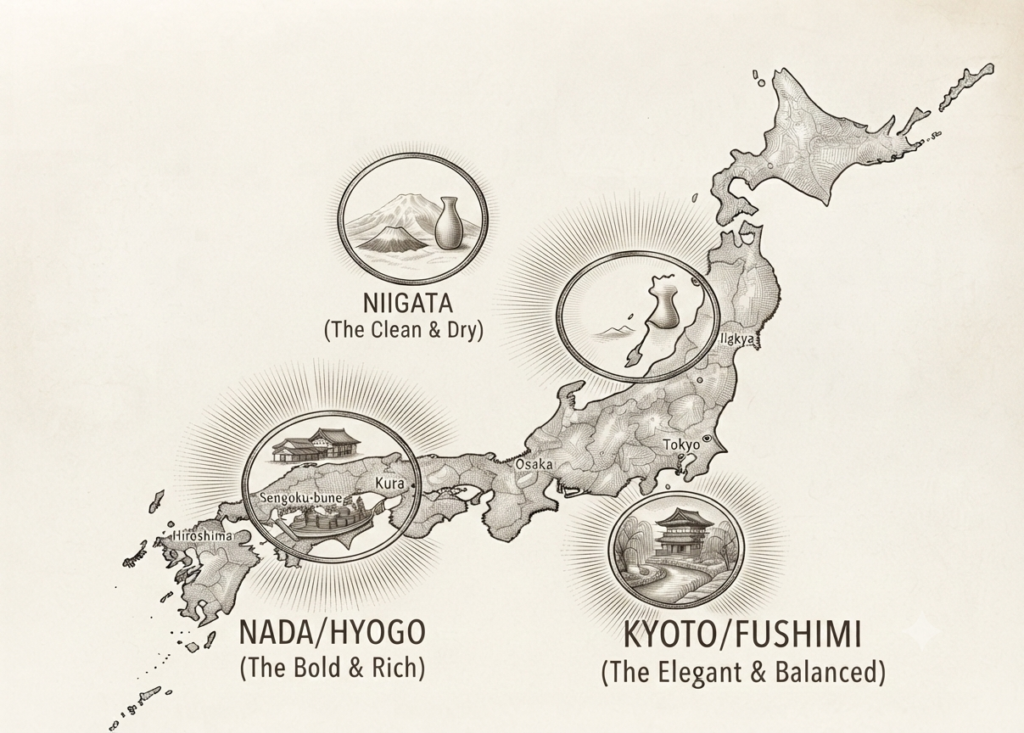
Niigata (The Clean & Dry): Known for tanrei karakuchi (light and dry) sake. Because the water is soft and the winters are snowy, the sake is crisp, refreshing, and incredibly smooth. Look for this if you want something that cleanses the palate.
Nada/Hyogo (The Bold & Rich): Often called the “Masculine” style. This region uses hard water rich in minerals, which creates bold, dry, and full-bodied sake. These are the workhorses of the industry—perfect with savory izakaya food.
Kyoto/Fushimi (The Elegant & Balanced): Famous for using “smooth” water. These sakes are often more fragrant and feminine in profile, with a soft, rounded mouthfeel that feels luxurious and delicate.
Are you Industry- or Indie-Sake?
Gold standard best seller Dassai is a reliable baseline for the Ginjo style. sakes. But Daily Driver Ozeki is more umami than floral and a serious value. Or step up in price and look for Junmai Ginjo or Junmai Daiginjo from smaller, regional producers.
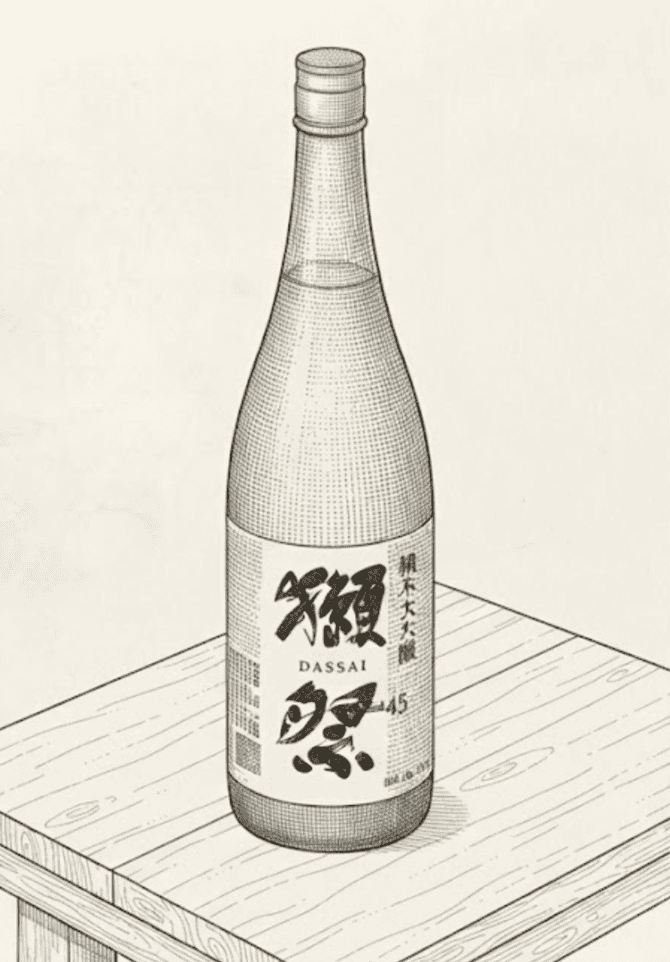
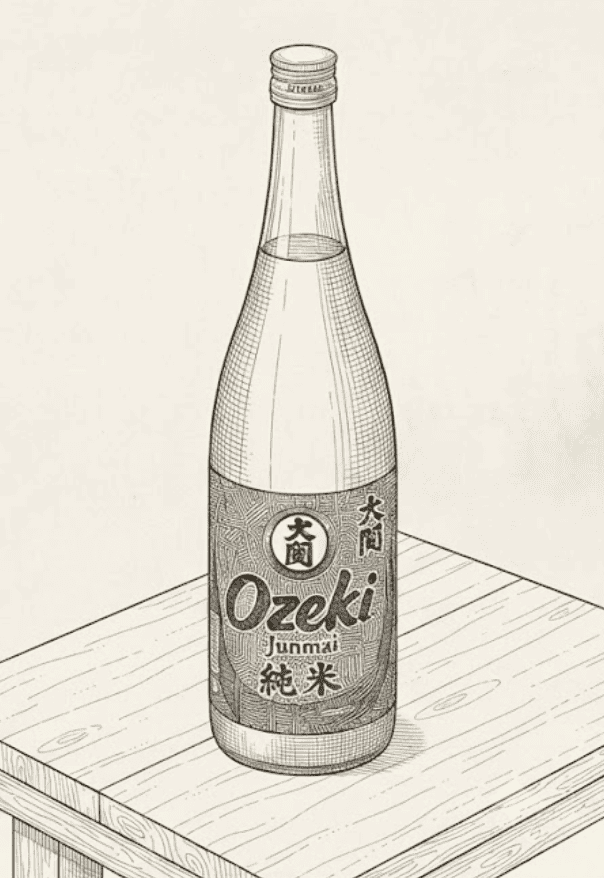
More Flush Deal-Hunter?
The “Special Designation” trick: If you find a bottle labeled Muroka Nama Genshu (unfiltered, unpasteurized, undiluted) within a $45-$50 price bracket, grab it. Because it hasn’t gone through extensive processing or transport overhead, you are getting the raw, high-intensity flavor profile that you would normally only see in much more expensive, limited-release bottles.
$45-$50
Ready for Japanese Sake Culture 201?
Japan´s Best Sake Dens: Unlike sometimes-rowdy izakayas, these venues prioritize brewer heritage, regional terroir, and guided tasting flights.
| City | Sake Bar/Den | Specialization |
| Tokyo | Ginza Kimijimaya | Historic shop-bar hybrid with 10+ rotating sakes. |
| Virtu | Opulent setting featuring signature sake-based cocktails. | |
| Sake Bar 42 | Curated selection of premium, small-batch bottles. | |
| Kyoto | Asano Nihonshu | Standing bar with 150+ varieties and expert pairings. |
| Masuya Saketen | Trendy spot offering high-quality sake with tapas-style dishes. | |
| Sakehall Masuya | Housed in a renovated townhouse with garden views. | |
| Osaka | Sake Republic | Enthusiast-focused space with curated flights. |
| Nihonshu Bar ○△□ | Standing-style bar with a rotating seasonal selection. | |
| Tachinomi (Uranamba) | Hidden local gems found within the vibrant Uranamba district. | |
| Sapporo | Bar Kamata | Specialist den with over 180 Hokkaido-produced labels. |
| Sake Bar Hibiki | Focuses on seasonal namazake (unpasteurized sake). | |
| Sapporo Sake Village | Cooperative tasting space for Hokkaido regional breweries. | |
| Nara | Nara Izumi Yusai | Offers 120+ brands from 28 local Nara breweries. |
| Yagi-Shuzou | Traditional storehouse featuring local brewing history. | |
| Kuramoto Shuzo | Scenic brewery setting in the Tsuge mountains. |
Bored With Sake? Essential Beer Kanji
アルコール分
Arukooru-bun: Indicates the Alcohol by Volume (ABV). As noted above, most standard Japanese lagers hover around 5%, but many are creeping into the sixes, so do your reading.
糖質ゼロ
Toushitsu Zero: “Zero sugar” or “zero carbohydrates.” This is very common in the happoshu and new genre categories, catering to health-conscious consumers.
原材料
Genryou: The ingredients list. Look for 麦芽 (Bakuga)—this is “malt.” If it is listed early in the ingredients, it is a true beer. If you see 大豆 (Daizu) (soy) or えんどう豆 (Endoumame) (peas), you are looking at a new genre product.
ビール
Biiru: Pasteurized! A more stable, traditional beer. May have a slightly richer, less “spritzy” character than its Nama counterpart.
瓶 / 大瓶
Large Bottle. Look for this on menus. It´ll be the traditional O-Bin (large bottle, usually ~633ml) staple size you´ll order to share in an izakaya.
ノンアルコール
Non-alcoholic. In Japan, products labeled as “non-alcoholic” typically contain less than 1.0% alcohol by volume, and the vast majority of mainstream brands are engineered to contain 0.00% alcohol.